No Delays
We clear the site fast so your builders, demolition teams, or earthmovers aren't held up.
Efficient block clearing and tree removal for new builds, renovations, and subdivisions.
Providing block clearing services in Attadale, Applecross, and Ardross.
When developers and homeowners require Land Clearing Attadale relies on our team to prep blocks for the next stage of construction.
With many 1960s homes in Attadale being knocked down to make way for modern builds on large blocks, dealing with sixty years of overgrown gardens and massive backyard trees is a common challenge. We clear the slate efficiently.
We clear the site fast so your builders, demolition teams, or earthmovers aren't held up.
Total removal of vegetation and stumps leaves a flat, workable surface for construction.
We ensure all waste is disposed of legally according to Melville's PSHB quarantine requirements.
We meet on-site to identify which trees are going, which are staying, and review access.
We provide a fixed price covering felling, chipping, stump grinding, and waste disposal.
Our machinery and climbing crews systematically drop, chip, and extract the vegetation.
We leave the soil ready for your earthmovers, with all debris removed.
If you are preparing a large 1960s block for subdivision or clearing an overgrown residential site for a new custom build, professional Land Clearing Attadale services are critical. Attadale and the surrounding river-frontage suburbs of the City of Melville feature some of the most established tree stock in Perth. While these large residential lots offer fantastic development potential and spectacular views of the Swan River, they also present complex site preparation challenges that demand professional intervention.
Our team at Melville Arborist provides comprehensive, site-specific land clearing solutions tailored to local conditions. Whether we are dealing with steep, unstable ground near Blackwall Reach or the deep Bassendean sand profiles typical of the area, our climbers, ground crew, and heavy machinery operators ensure your block is cleared efficiently and safely. We do not farm out our work to untraceable contractors; when you hire us, our trucks and our certified arborists arrive on-site, ready to deliver safe, compliant, and builder-ready results.
Attempting DIY block clearing or hiring uncertified operators often leads to expensive delays, severe environmental breaches, and damaged property. Heavy machinery driven indiscriminately across a site can instantly compact the soil, severely damaging the Structural Root Zones (SRZ) of remnant native trees you intended to keep for street appeal or compliance.
In the City of Melville, improper handling of cleared vegetation is a major, highly enforced biosecurity risk. The entire council area currently sits inside the Polyphagous Shot Hole Borer (PSHB) Quarantine Area. Slashing and dumping borer-host species without proper processing breaches strict Department of Primary Industries and Regional Development (DPIRD) regulations and accelerates the spread of this declared pest, risking severe penalties.
Furthermore, while the City of Melville Local Planning Scheme No. 6 (LPS6) currently lacks general tree protection for private residential lots, remnant native vegetation remains fiercely protected by the state Environmental Protection Act 1986. Bulldozing mature Tuarts, Jarrahs, or Marris without checking exemption criteria can result in devastating fines and project shutdowns.
By engaging our AQF Level 3 and Level 5 arborists, you eliminate these risks completely. We understand exactly how to navigate AS4970 guidelines to protect retained trees, manage DPIRD quarantine requirements seamlessly, and deliver a pristine, builder-ready site without the legal or environmental headaches.
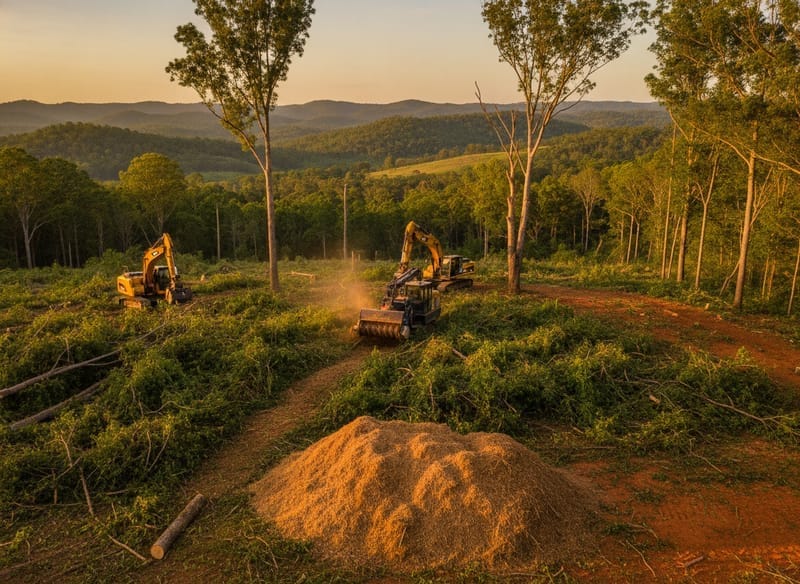
We utilise a fleet of modern equipment, from heavy-duty tracked skid steers to high-capacity wood chippers, to execute efficient land clearing across Melville. Here is how we tailor our methods to your project requirements.
We remove all designated vegetation within the construction footprint. This includes the systematic dismantling of large remnant eucalypts or planted jacarandas, bulk brush removal, and deep stump grinding to ensure the soil is completely clear of root systems that could interfere with foundation pours.
For properties bordering bushland on the Map of Bush Fire Prone Areas, we selectively clear flammable understory and establish mandatory firebreaks. We ensure your property complies with the Bush Fires Act 1954 and AS3959 bushfire construction standards, reducing fuel loads while preserving healthy, low-risk canopy trees.
When preparing subdivisions where significant Tuart or WA Peppermint trees must be retained, we follow AS4970 standards. We establish Tree Protection Zones (TPZ) and carefully dismantle adjacent vegetation using rope-access climbing or Elevating Work Platforms (EWPs) to prevent any physical damage or soil compaction around the preserved timber.
Attadale is an active quarantine zone. We identify high-risk borer hosts like box elder maples and coral trees. All host stems over 2cm are processed on-site through our 12-inch chippers down to the legally required size (under 2.5cm) or securely transported in sealed trucks to an approved DPIRD waste facility.
From the initial walk-through to the final load of mulch, our team follows a rigid, safety-first workflow designed specifically for local conditions.
Step 1: Environmental Assessment and Quotation We start with a thorough site inspection. Our AQF Level 5 consulting arborist can review your lot to identify any remnant native vegetation protected under the EPA 1986. We also assess terrain access, from flat sandy blocks to steep escarpments, and provide a transparent, detailed quote with no hidden fees.
Step 2: Securing the Site and Tree Protection Before any machinery is started, we mark out the specific boundaries of the clearing zone. Any trees slated for retention are heavily protected in accordance with AS4970, establishing clear exclusion zones to keep skid steers and tipper trucks off their vulnerable root systems.
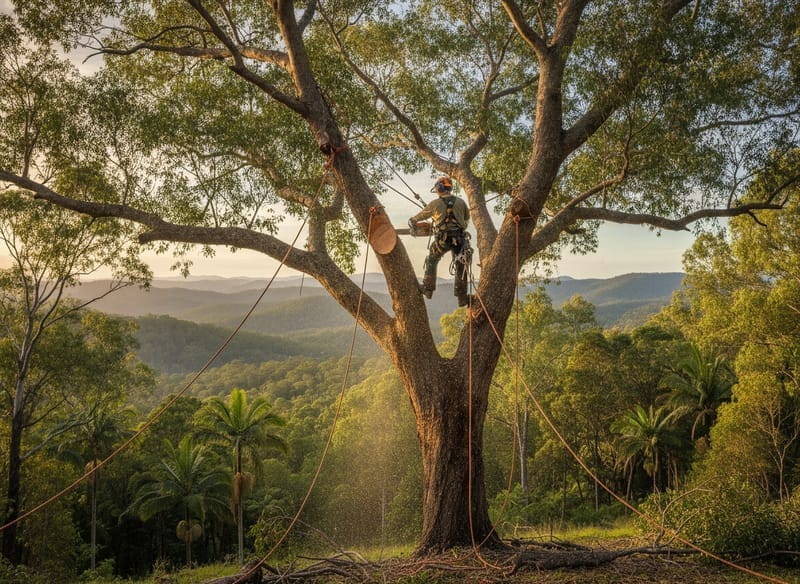
Step 3: Systematic Dismantling and Felling For large mature trees, our AQF Level 3 climbers use advanced rope-access techniques or EWPs to dismantle the canopy piece by piece. This controlled approach is critical in established Attadale suburbs where properties are tightly packed. Smaller scrub and understory are mechanically gathered.
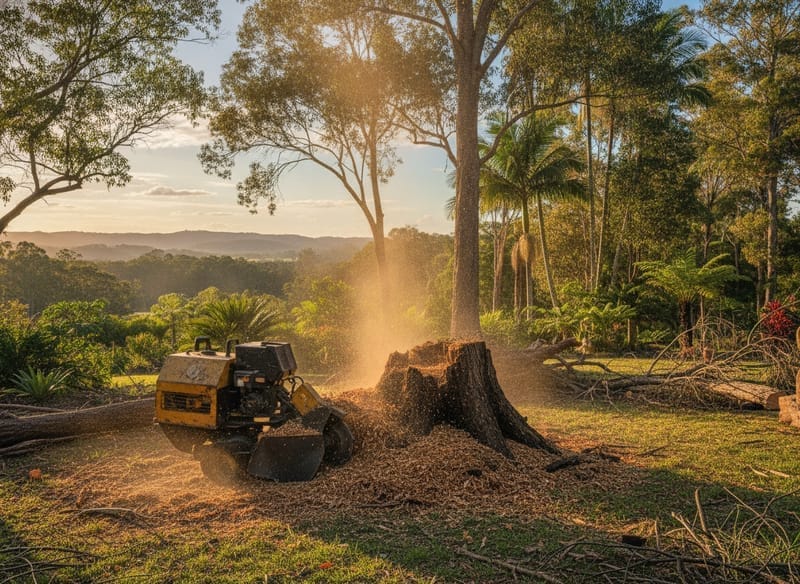
Step 4: Processing and Stump Grinding All timber and brush are fed into our heavy-duty wood chippers. We strictly adhere to PSHB quarantine rules, ensuring wood matter is correctly sized or disposed of safely. Finally, we bring in stump grinders to obliterate the remaining root balls 150–300mm below grade, leaving the site completely level and ready for earthworks.
We are fully insured with comprehensive Public Liability and WorkCover, giving developers, property managers, and homeowners total peace of mind. Every operator on our crew holds the necessary High Risk Work licences, White Cards, and EWP tickets.
When dealing with boundary trees or retained canopy, we strictly enforce AS4373 (Pruning of Amenity Trees) and AS4970 (Protection of Trees on Development Sites). We never top or lop trees, as this destroys their structural integrity and creates massive future hazards. We operate a highly disciplined worksite with dedicated traffic management (RIIWHS205D) for jobs that require roadside truck parking or crane assistance.
Working in Attadale requires deep local knowledge. The terrain ranges from deep, soft Bassendean sands to the steep, unstable limestone escarpments near Point Walter. Heavy winter cold fronts and strong summer sea breezes frequently stress local timber, meaning any retained eucalypt canopy must be meticulously assessed for sudden limb drop risks.
While the City of Melville's LPS6 currently allows removal of trees on private property without council approval, you must still comply with the EPA 1986 regarding remnant native vegetation. You must also adhere to the City's annual Firebreak and Hazard Reduction Notice, which requires residential lots under 1,500m2 to be cleared of specific flammable matter before the bushfire season. Finally, we manage the logistical headache of the PSHB Quarantine Area for you, legally processing heavily infested species like box elder maples and coral trees so you avoid DPIRD penalties.
Once the heavy clearing is complete, exposed Spearwood or Bassendean sand can quickly succumb to wind and water erosion. We highly recommend using the processed mulch from your cleared vegetation to stabilise the topsoil and suppress aggressive weed regrowth, provided it complies with PSHB quarantine retention guidelines.
If your development application requires replanting, ensure new stock meets AS2303 standards for landscape use. For any large remnant native trees you have retained on the block, keep a close eye on their canopy. Construction activities and altered wind exposures can induce stress. Call our team back for an annual inspection to ensure these valuable assets remain structurally sound and safe.
Land clearing is priced based on the volume of vegetation and the machinery required.
We offer clear, fixed-price quotes for block clearing to keep your project budget on track.
Clearing blocks across the Melville region.
Contact us today for a free site assessment and comprehensive land clearing quote.
Get a Clearing Quote