Restore Your Yard
Clear away unsightly and dangerous debris fast.
Comprehensive cleanup of fallen limbs, broken canopies, and uprooted trees after severe weather.
Reliable storm cleanup services across Bicton and the City of Melville.
Our Storm Damage Tree Removal Bicton service handles the massive cleanup effort required after winter squalls or autumn thunderstorms.
Bicton regularly experiences intense cold front winds from May to September. These winds, hitting mature eucalypts in wet sandy soil, frequently cause whole-tree uprooting that requires heavy-duty clearing.
Clear away unsightly and dangerous debris fast.
We identify and remove broken limbs snagged high in the canopy before they drop unexpectedly.
Let our machinery do the heavy lifting rather than spending your weekend with a hand-saw and trailer.
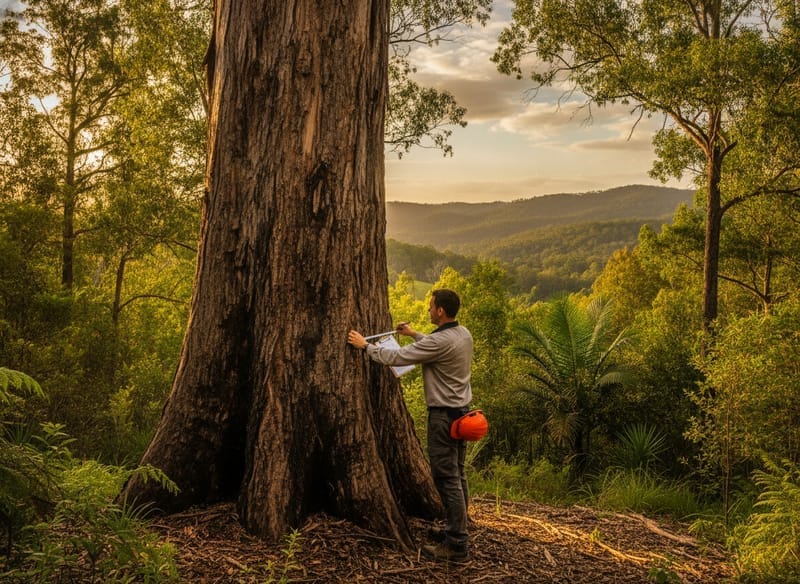
We assess the volume of debris and check the remaining trees for hidden damage.
We provide a clear cost for the complete cleanup and removal.
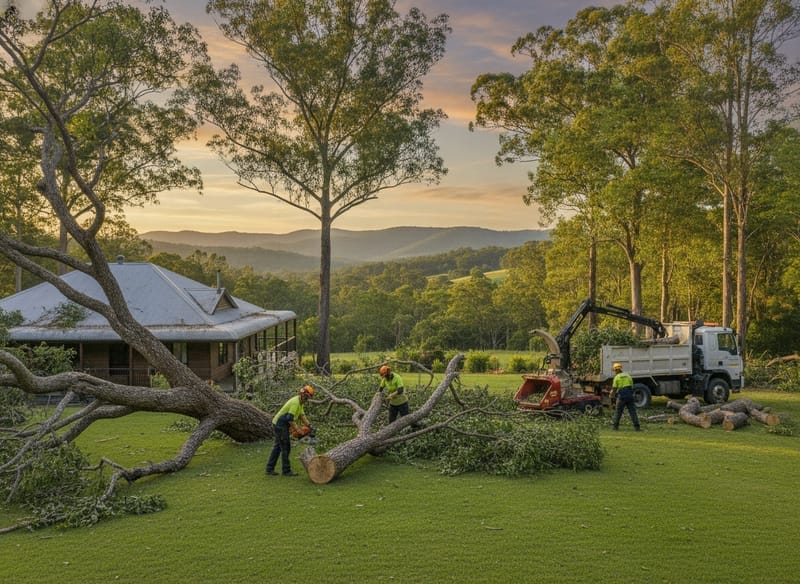
Our crew uses chainsaws and high-capacity chippers to process the fallen vegetation.
We rake and clear the area, leaving your Bicton property tidy.
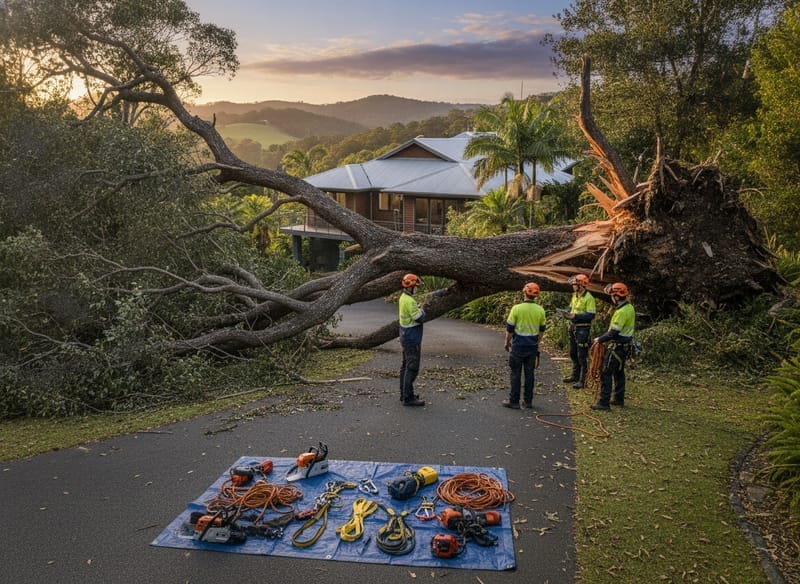
When severe weather strikes the Swan Coastal Plain, the aftermath can be devastating for properties along the river. Whether it is a failed lemon scented gum branch resting on your roof or a completely uprooted tuart blocking your driveway, fast and professional Storm Damage Tree Removal Bicton is critical to making your property safe. Our local team of qualified arborists understands the urgency of post-storm recovery and is ready to secure your site. In Bicton and the wider Melville area, our Mediterranean climate brings unique hazards. Winter cold fronts on saturated sandy soils often lead to root-plate failures, while summer sea breezes and sudden autumn thunderstorms cause violent limb drop in mature eucalypts. When large, established trees fail, you need a highly experienced crew equipped with heavy machinery and specialized climbing gear to handle the extreme tension and unpredictability of snapped and twisted timber. We are that team.
Storm-damaged trees are incredibly volatile. Attempting DIY removal or hiring under-qualified operators to clear fallen or hung-up timber is a leading cause of severe injury and secondary property damage. A partially uprooted marri or a massive twisted jarrah limb under extreme compression behaves entirely differently than a standing tree. One wrong cut with a chainsaw can cause a huge trunk to roll, snap back, or crush a roof cavity. Beyond the immediate physical danger, amateur clear-up work often ignores proper arboricultural standards. If a tree has sustained heavy storm damage but might be salvageable, an unqualified lopper will typically butcher the remaining canopy in a panic. This promotes weak epicormic regrowth, accelerates decay, and creates a far greater hazard for the next winter front. The solution is bringing in our AQF Level 3 climbing arborists and AQF Level 5 consulting team. We assess the structural integrity of every affected tree. If total removal is necessary, we dismantle the hazard methodically, managing heavy weights with cranes and rigging systems. If a tree can be saved, we perform AS4373-compliant corrective pruning to remove the hazard, rebalance the canopy, and preserve its long-term health.
When assessing and clearing storm-damaged trees, our team employs specialised techniques to safely manage unpredictable weights, extreme tension, and heavy timber on complex sites.
We walk the property to tag hazards by priority, identifying immediate risks over houses and power lines versus secondary cleanup tasks. Make-safe work involves securing hung-up limbs and relieving tension before full removal begins.
For unpredictable, heavily loaded branches suspended over structures, we utilise loader cranes and advanced lowering systems to lift massive timber vertically, preventing any sudden drops onto your roof or fencing.
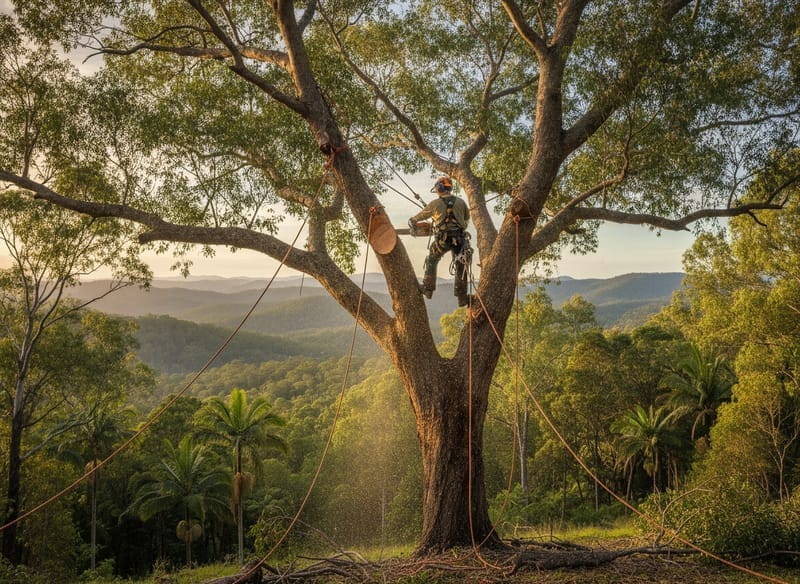
For steep river escarpment properties where Elevated Work Platforms (EWPs) cannot reach, our climbers employ single-rope and double-rope access techniques to safely dismantle compromised standing trees section by section.
Fallen timber is cross-cut using high-powered ground saws (MS500i, 572XP) and processed through 12-inch capacity chippers, strictly adhering to Polyphagous Shot Hole Borer quarantine rules for host species.
Storm-uprooted root plates can cause severe soil disturbance. We use high-powered wheeled or self-propelled stump grinders to mill out the remaining stump 150-300mm below grade, allowing you to easily repair the landscape.
When you call our team for emergency assistance, our process is designed to secure your site as rapidly as possible while strictly adhering to safety protocols and insurance requirements. First, we conduct an immediate on-site assessment. We walk the property to triage the damage, categorising trees into immediate hazards, secondary hazards, and basic cleanup tasks. We document everything with comprehensive photography to assist with your insurance claim and provide a detailed, itemised quote breaking out each tree and job line. Once approved, the make-safe phase begins. Our priority is lifting trees off structures, clearing driveways, and removing suspended branches that threaten power lines or pedestrian access. We utilise elevated work platforms (EWPs), complex rope systems, and crane assistance to lift heavy timber away without causing further damage to your home. After the immediate danger is neutralised, we commence the complete removal and processing of the fallen wood. We cross-cut large logs, chip the brush, and completely clear the debris from your yard. Finally, our AQF Level 5 consulting arborist can provide formal arboricultural reports if required by your insurer, ensuring the entire operation is fully documented and professionally resolved.
Our post-storm operations strictly follow industry guidelines, including the AS4373 standard for pruning and AS4970 for the protection of retained trees on development sites. During unpredictable emergency work, safety is paramount. Every climber in our crew holds AQF Level 3 Arboriculture qualifications, Working at Heights, and High-Risk EWP tickets.
We are fully public liability insured and carry comprehensive WorkCover for all staff, meaning you are never exposed to financial risk while we operate heavy machinery on your property. For major insurance claims, our AQF Level 5 consulting arborist provides the detailed structural reports and damage assessments that insurers demand before authorising complex hazard removals.
Performing Storm Damage Tree Removal Bicton requires deep local knowledge of both the terrain and municipal regulations. Bicton properties, particularly those near the steep limestone escarpments of Blackwall Reach and Point Walter, can have incredibly difficult access. We regularly navigate narrow driveways and undulating slopes to dismantle massive failed tuart and jarrah trees.
Under the City of Melville Local Planning Scheme No. 6 (LPS6), there is generally no tree protection on private land, meaning dead, dying, and dangerous trees can be removed without council approval. However, the entire area sits inside the Polyphagous Shot Hole Borer Quarantine Area. This heavily impacts how we handle storm-damaged host species like box elder maple, coral trees, and jacarandas. Stems over 2 cm cannot leave the area unless chipped under 2.5 cm or transported sealed to an approved waste facility. We strictly manage all green waste to comply with Department of Primary Industries and Regional Development (DPIRD) regulations.
Once the emergency hazard has been safely removed, your landscape will require careful monitoring. If nearby trees sustained high winds but did not fall, their root plates may have shifted or their branch unions may have silently fractured. We highly recommend keeping a close eye on the soil at the base of your remaining eucalypts for signs of heaving or cracking.
Water the retained trees deeply to reduce shock, and ensure your property adheres to the City's annual Firebreak and Hazard Reduction Notice by keeping the ground clear of dry, flammable storm debris. Call our consulting arborists back in 6 to 12 months for a follow-up structural assessment of your remaining canopy.
Storm cleanup is priced based on the volume of debris and the complexity of the processing.
We provide transparent quotes, often coordinating directly with what your insurance requires.
Providing reliable storm cleanup to Bicton and surrounding suburbs.
Contact our team for fast, professional storm damage cleanup in Bicton.
Book a Cleanup Quote