Restore Your Property
Get your yard, driveway, and outdoor areas back to normal quickly after a severe storm.
Fast, safe, and professional post-storm cleanup. We remove fallen branches, secure damaged trees, and help with insurance claims.
Providing reliable post-storm tree cleanup across Brentwood, Winthrop, and Myaree.
Our Storm Damage Tree Removal Brentwood service focuses on comprehensive cleanup and hazard mitigation after severe weather passes through.
Winter storms from May to September bring heavy rains that saturate Brentwood's sandy soils, combining with gale-force winds to topple large native eucalypts. We are highly experienced in cleaning up this specific type of local damage.
Get your yard, driveway, and outdoor areas back to normal quickly after a severe storm.
Removing shattered, hanging branches ensures they don't fall days later onto people or property.
Our professional documentation takes the stress out of dealing with assessors and claims.
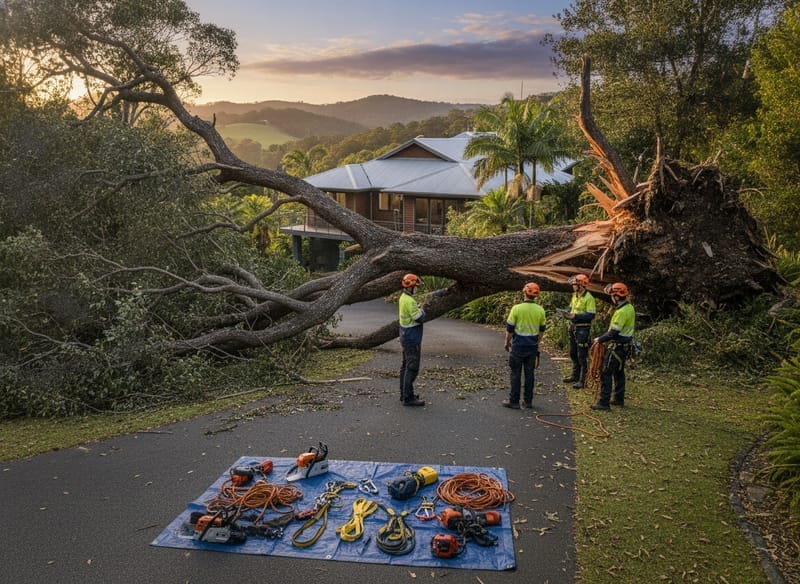
We arrive in Brentwood to evaluate the storm damage, ensuring there are no hidden hazards like downed powerlines or unstable root plates.
We provide a comprehensive quote for the cleanup, ready to hand straight to your insurance provider.
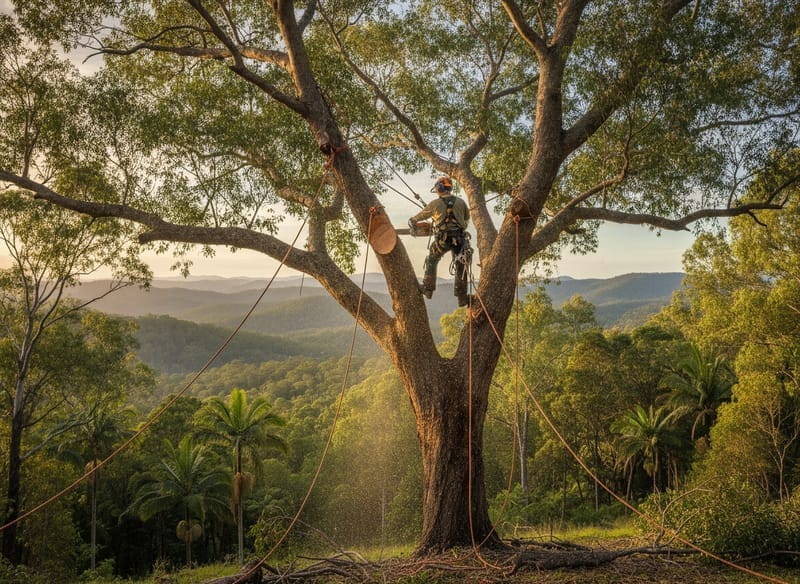
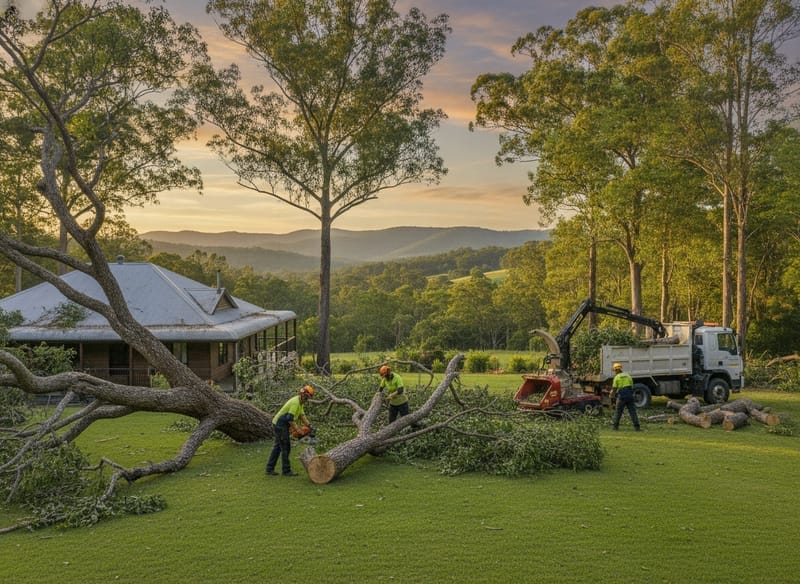
Our team uses chainsaws and chippers to process fallen debris, and we climb to remove any shattered branches still in the canopy.
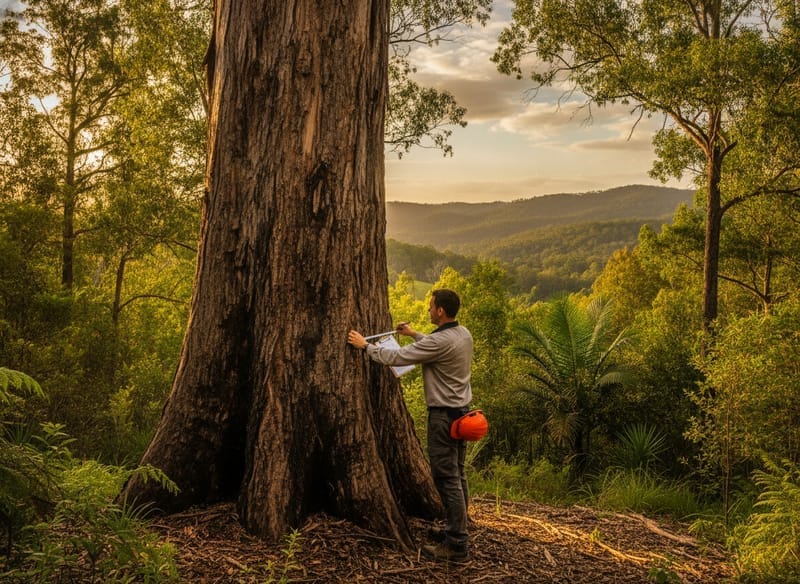
We perform a final check of the remaining trees to ensure they are structurally sound before leaving your site clean.
When autumn convective thunderstorms or heavy winter cold fronts sweep across the Swan Coastal Plain, mature canopies can suffer catastrophic failure. If you are facing fallen branches, hung-up limbs, or uprooted trunks, our team provides the rapid, professional Storm Damage Tree Removal Brentwood residents and property managers rely on to restore safety and order. We are Melville Arborist, your local tree management experts. Properties in this area often feature towering remnant tuarts, jarrahs, and massive planted lemon scented gums. When severe weather hits saturated local sands, the sheer weight of these rain-soaked canopies coupled with intense wind loading can lead to sudden root-plate failures or massive limb drop. Whether a snapped branch has breached your roofline, a split trunk threatens your fence, or a large Brisbane box is blocking your driveway, our experienced climbing arborists and heavy machinery operators are ready to deploy. We bring the heavy lifting capacity and the technical arboriculture expertise required to secure your property safely, efficiently, and with minimal disruption to your home.
Tackling storm-damaged trees without professional equipment, rigging gear, and formal training is highly dangerous. After a severe weather event, fallen or partially failed trees are often under extreme, unpredictable tension. A partially uprooted marri or a massive snapped jacaranda branch caught in the mid-canopy can release violently if cut incorrectly, leading to severe injury or devastating secondary damage to your home. Furthermore, under-qualified operators or opportunistic "door-knockers" often resort to aggressive lopping or topping to quickly clear storm debris, leaving jagged stubs and torn bark behind. This directly violates AS4373 (Pruning of Amenity Trees), promotes weak epicormic regrowth, and introduces rampant decay into the remaining tree structure—virtually guaranteeing dangerous future failures during the next winter storm cycle. Our qualified arborists provide a structured, safe, and AS4373-compliant approach to storm recovery. We don't just hack away the damage; we carefully assess the structural integrity of the remaining canopy. By employing precise branch collar cuts and targeted pruning on damaged limbs, we give your tree its best chance to compartmentalise the wounds and recover. If a tree is critically compromised and poses an immediate threat to life or property, we possess the skills and equipment to safely dismantle it piece by piece.
Storm clean-up is far more complex than standard tree removal. We utilise specialised equipment and advanced rigging techniques to safely extract compromised trees without causing further damage to your property.
Our primary objective is site stabilisation. We utilise elevating work platforms (EWPs) or advanced rope-access techniques to safely reach and secure hung-up branches, removing the immediate overhead threats to roofs, powerlines, and driveways before commencing the full clean-up.
Storm-fallen timber stores immense kinetic energy. Our AQF Level 3 chainsaw operators are formally ticketed in complex cross-cutting (FWPCOT2239), allowing us to safely read and release dangerous compression and tension points in twisted trunks, entirely avoiding chainsaw kickback or sudden log roll.
For massive tuarts or lemon scented gums that have collapsed onto homes or fragile structures, we deploy crane-assisted removals. This allows us to rig and lift multi-tonne timber sections vertically off the structure, entirely avoiding collateral damage to the roof or property below.
We process all limbs and debris on-site using commercial 12-inch wood chippers. Because Brentwood sits within the Polyphagous Shot Hole Borer Quarantine Area, we strictly adhere to biosecurity protocols, chipping host material under 2.5 cm or securely transporting logs to approved waste facilities.
When you require Storm Damage Tree Removal Brentwood, time is of the essence. Our internal process is designed to act fast, secure your property against further risk, and provide exactly what your insurance company needs to process your claim smoothly. Step one is rapid site triage. Upon arrival, we walk your property to categorise the hazards, strictly prioritising immediate threats to life, dwellings, and primary access roads. Secondary hazards, such as partially failed canopies on the property boundary, are tagged for subsequent clearance. Step two involves comprehensive photographic documentation. Before a single chainsaw is started, we photograph all damage and structural tree failures. We then provide a highly detailed, itemised quote that breaks down each specific job line. This transparent documentation is formatted specifically for direct submission to your insurer. Step three is the make-safe phase. Our AQF Level 3 climbing arborists deploy EWPs or rope-access systems to remove the most critical overhead hazards and stabilise split trunks. Finally, we execute the complete removal and clean-up. Heavy logs are lifted out using loader cranes, and all shattered branches are processed through our chippers. We leave your Brentwood site meticulously clean, ensuring all waste movement complies strictly with local biosecurity rules.
Storm recovery work carries severe inherent risks, which is why strict compliance is non-negotiable for our team. Our business is fully backed by comprehensive Public Liability insurance and mandatory WorkCover for all employees, ensuring you are never held financially liable for accidents on your property.
Our on-the-ground team consists of AQF Level 3 climbing arborists holding essential high-risk tickets, including Working at Heights and Elevating Work Platform (EWP) operation. Where catastrophic damage requires complex insurance justifications or local council DA reports, our AQF Level 5 consulting arborists provide the necessary formal documentation. All remedial pruning cuts performed during our clean-ups strictly adhere to AS4373, ensuring your retained trees are protected.
Executing Storm Damage Tree Removal Brentwood requires deep local knowledge of both the environment and council regulations. The City of Melville Local Planning Scheme No. 6 (LPS6) currently has no general tree protection overlay on private land. This means owners can clear dead, dying, or storm-wrecked trees without navigating a complex council permit system. However, we always recommend keeping our written arborist justification on file to prove the tree was a genuine hazard.
The dominant local hazard is the combination of Brentwood's sandy soils—specifically deep Bassendean and Spearwood sands—and Perth's fierce winter cold fronts. When these sands become completely saturated, top-heavy canopies like remnant WA peppermint or towering lemon scented gums are highly susceptible to sudden root-plate heave.
Crucially, Brentwood sits entirely inside the Polyphagous Shot Hole Borer (PSHB) Quarantine Area. Highly susceptible borer host trees like box elder maple and coral tree are common in local gardens. Because of this declared pest, we cannot simply cart off large storm-damaged logs to anywhere we choose. We ensure all cut wood is either chipped to compliant biosecurity sizes on-site or transported strictly sealed to DPIRD-listed waste facilities.
Once the fallen debris is cleared, your surviving trees require careful monitoring. High cyclonic winds can cause microscopic root tearing or minor structural twisting that isn't obvious to the untrained eye. In the weeks following a severe weather event, watch your remaining large trees for signs of root heave, unusual leaning, cracking soil around the base, or sudden epicormic sprouting—a clear sign of severe stress. We highly recommend scheduling a comprehensive canopy inspection before the next winter storm season begins. Our arborists can identify and selectively prune weakened branches, remove deadwood, and correct structural faults, ensuring your property is secure and your trees remain healthy.
Storm damage cleanup is quoted based on the volume of debris and the complexity of the work.
We offer transparent quotes and can liaise with your insurance company to ensure costs are clearly understood.
We provide storm cleanup across the City of Melville.
Contact our local team for safe, efficient tree removal and insurance-friendly quotes.
Get a Free Quote