Safer Regrowth
Proper cuts ensure new growth is strongly attached, unlike the weak shoots caused by lopping.
We provide professional, AS4373-compliant height reduction and canopy management instead of damaging lopping practices.
Educating and servicing property owners across Mount Pleasant and the City of Melville.
Many residents ask for Tree Lopping Mount Pleasant when they actually need professional height reduction or canopy thinning.
In Mount Pleasant, fast-growing species like Brisbane box and various eucalypts can quickly dominate a 1960s suburban block. While the instinct might be to 'chop the top off' (lopping), this exposes the tree to decay and creates a massive hazard during Melville's autumn thunderstorms. We provide proper crown reduction that achieves your space and light goals without ruining the tree.
Proper cuts ensure new growth is strongly attached, unlike the weak shoots caused by lopping.
Maintain the natural, beautiful shape of your trees rather than leaving ugly, bare stumps.
We ensure all work meets Australian Standards, keeping your property safe and insured.
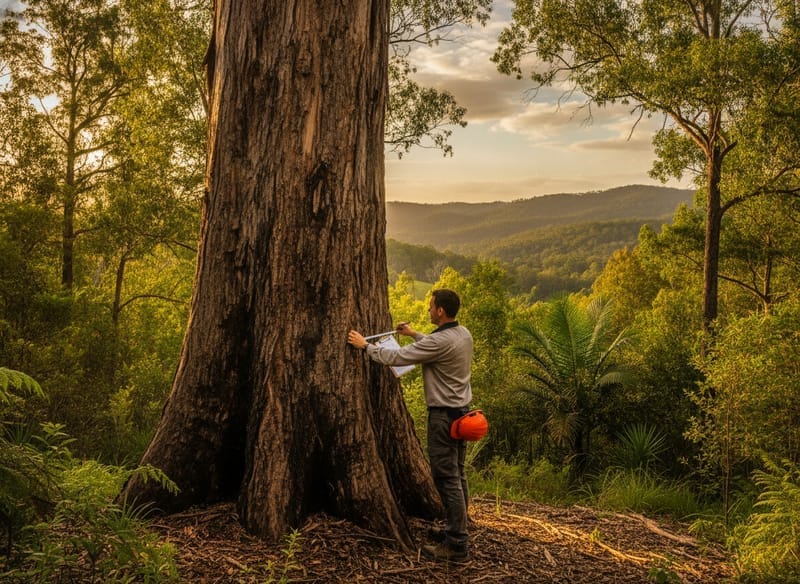
We assess the overgrown tree in Mount Pleasant to understand your goals.
We explain why lopping is harmful and propose a reduction plan or complete removal.
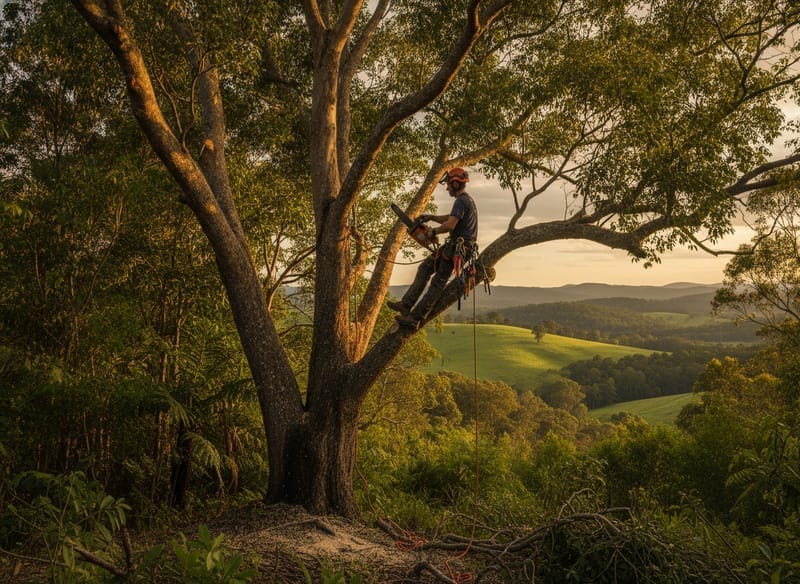
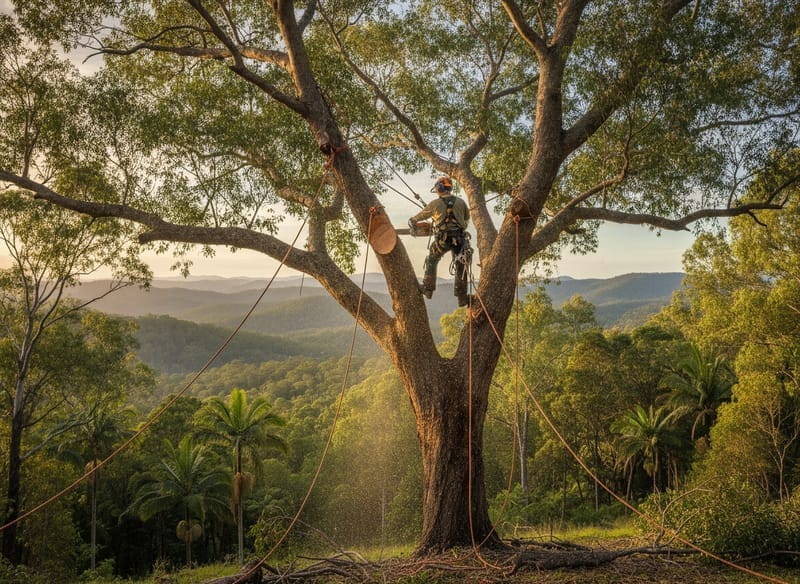
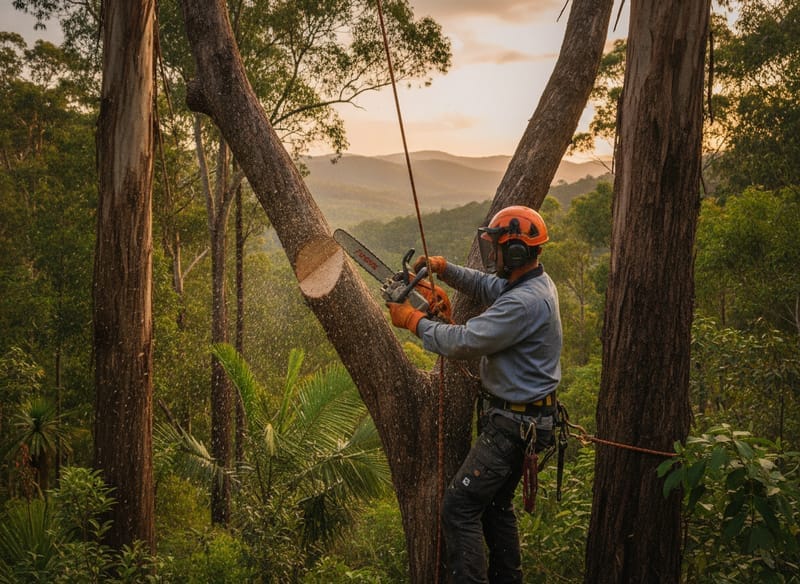
Our climbers perform targeted reduction cuts to suitable growth points.
All branches are chipped and removed from your property.
If your property's trees have outgrown their available space, our team provides the professional Tree Lopping Mount Pleasant property owners trust to keep their landscape safe and manageable.
Mount Pleasant and the surrounding City of Melville suburbs are characterised by their generous 1960s and 1970s residential blocks. Over the decades, planted jacarandas, lemon scented gums, and remnant jarrah have grown significantly. When these mature trees become overwhelming, they can block natural light, encroach on rooflines, or pose a serious hazard during Perth's intense winter cold front winds.
We understand that when you ask for "lopping," you simply want your tree made smaller, safer, and neater. Our experienced climbers use advanced, arboriculturally sound techniques to reduce your tree's canopy without resorting to damaging hacking practices. We protect your property, preserve the health of your trees, and ensure your home is prepared for both winter storm seasons and sudden summer limb drop.
When most homeowners contact us asking for tree lopping, they usually just want a large, imposing tree made shorter or less widespread. However, in the professional arboriculture industry, indiscriminate lopping or "topping" is highly discouraged because it permanently damages the tree's structure.
Hacking a tree back to bare stubs causes severe stress. It removes the tree's ability to photosynthesise, accelerating internal decay. Worse, the tree responds by rapidly pushing out weak, epicormic regrowth. These new branches are poorly attached to the trunk and are highly susceptible to sudden limb drop, particularly in our local eucalypts during the hot, dry summer months.
Our solution is different. Instead of harmful topping, our team performs AS4373-compliant crown reduction. We selectively prune branches back to appropriate growth points using precise branch collar cuts. This achieves the exact same goal—making your tree smaller and reducing overhanging risks—while maintaining the tree's structural integrity and natural shape. Doing it right the first time extends the life of your tree and saves you money on emergency storm cleanups in the future.
When you need a tree's size reduced, our qualified climbing arborists use proven methods to achieve your clearance goals without destroying the health of your landscape.
When a tree needs to be made smaller, we carefully reduce the overall height and spread of the canopy. We target specific lateral branches to ensure the tree retains a natural shape and remains structurally sound, typically removing no more than 25-30% of the live crown.
If low-hanging branches are blocking driveways, pedestrian paths, or your line of sight, we safely remove the lower limbs. This increases clearance underneath the tree while leaving the upper canopy fully intact and thriving.
For trees with overly dense canopies that block natural light or catch too much wind, we selectively remove secondary branches throughout the crown. This reduces wind resistance during winter storms without altering the tree's overall height.
We target specific problem limbs, such as those encroaching on your roofline, gutters, or neighbouring properties. We use precise target pruning to eliminate the hazard while keeping the rest of the tree balanced.
Our process begins with an on-site assessment of your Mount Pleasant property. We evaluate the tree's species, health, and location, taking note of tight access paths or steep ground toward the river escarpment. We then provide a clear, upfront quote outlining exactly how we will reduce the canopy. On the day of the job, our team arrives fully equipped. For hard-to-reach trees in backyards, we utilise advanced rope-access climbing techniques. For accessible front yard or verge-adjacent work, we may deploy an Elevating Work Platform (EWP). Our arborists use specialised top-handle chainsaws to make precise, clean cuts that promote rapid healing. We take our environmental responsibilities seriously. Because all of Melville sits inside the Polyphagous Shot Hole Borer (PSHB) Quarantine Area, we strictly manage all green waste. Host plant stems over 2cm and cut wood over 2.5cm must not leave the area unless we chip them on-site to under 2.5cm using our heavy-duty wood chippers, or transport them completely sealed to a listed waste facility. We leave your site immaculate, with all compliant waste removed and your tree beautifully shaped.
All of our canopy reduction and pruning work is executed strictly in accordance with AS4373 - Pruning of Amenity Trees. Our team includes AQF Level 3 climbing arborists for hands-on execution and AQF Level 5 consulting arborists for any required council reports.
Safety is our paramount concern. We carry full public liability and WorkCover insurance, protecting your property and our staff throughout the duration of the job. We hold all necessary high-risk tickets, including Working at Heights and EWP licences. Furthermore, we maintain strict adherence to Department of Primary Industries and Regional Development (DPIRD) biosecurity protocols regarding the PSHB outbreak, ensuring we never inadvertently spread the pest through improper waste transport.
Operating successfully across the City of Melville means our team is intimately familiar with local terrain, soil profiles, and planning rules. Under the current City of Melville Local Planning Scheme No. 6 (LPS6), there is no general tree protection on private land. This means planted garden trees like jacaranda, Brisbane box, or coral trees can usually be reduced or removed without a time-consuming permit.
However, there are vital exceptions. Remnant native vegetation, including mature tuart, jarrah, and WA peppermint, is protected by the Environmental Protection Act 1986. If your property is heavily vegetated or sits near the steep river escarpment at Blackwall Reach, you may also fall under the Map of Bush Fire Prone Areas, which triggers specific Asset Protection Zone clearances under the Bush Fires Act 1954.
Finally, we tailor our tree management to the unique risks of our Mediterranean climate. Winter cold fronts batter heavy canopies on saturated Spearwood sand, while chronic summer drought stress drives sudden limb drop in eucalypts. We prune specifically to mitigate these exact local hazards.
After we have completed the size reduction, your tree will require a brief recovery period. During Perth's hot, dry summer months, provide your tree with deep, infrequent watering to reduce stress and help it seal the pruning wounds.
Keep a close eye on the tree over the following season. Watch for any aggressive epicormic shoots (water sprouts) along the trunk, and regularly inspect susceptible species like box elder maples for tiny borer holes indicative of PSHB activity. A thick layer of organic mulch around the base will help retain moisture. Depending on the species and growth rate, we recommend having our arborists return every 3 to 5 years for standard maintenance pruning to ensure the canopy remains safe and beautifully structured.
Instead of cheap, damaging lopping, we offer competitive pricing on proper tree management.
We provide free, fixed-price quotes outlining exactly what pruning or removal work will be done.
We provide expert canopy management across the local area.
Contact us today for a free quote on professional, safe height reduction or removal.
Get a Free Quote